 Iguazu Falls Boat Tour
Visiting Iguazu Falls Without a Tour
Last reviewed September 2026
Visiting Iguazu Falls without a tour works on both banks, and the arithmetic is simple enough to check before you decide. Public buses run to each park every twenty minutes or so, both parks sell admission at the window, and both boats are sold at their own counters inside. This page prices a self-organised day on each side, sets out the transport, and says plainly where a booked Iguazu Falls boat tour still earns its money.
Quick answer What a self-organised day costs on each bank, and where a tour still earns its money
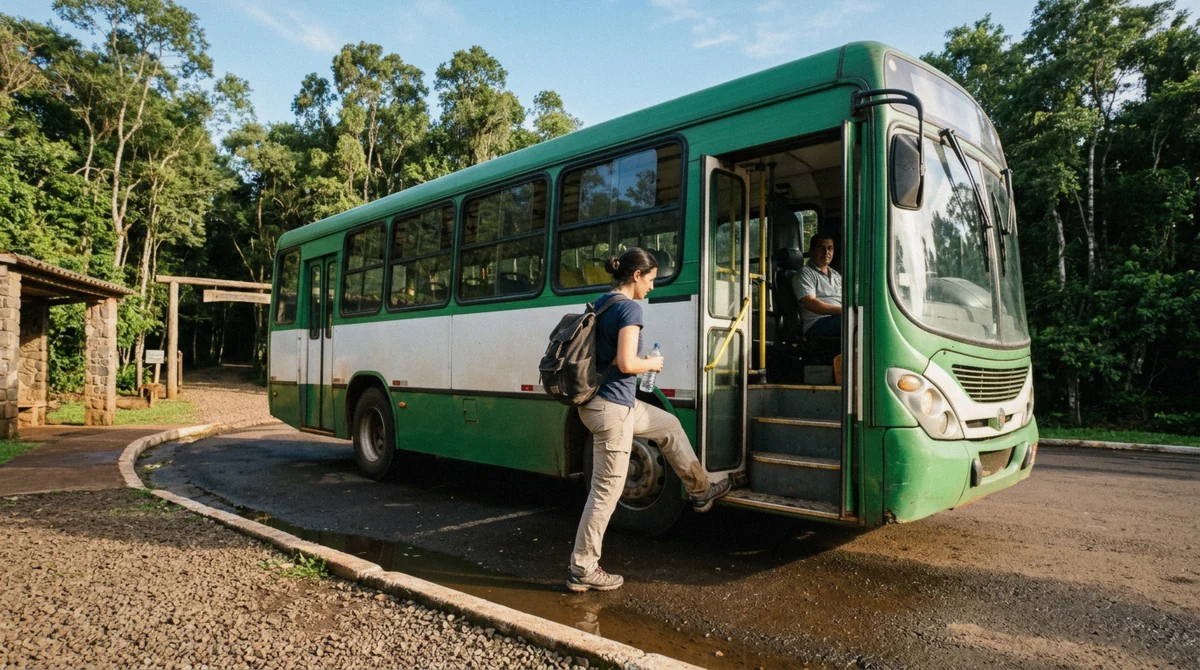
Yes, and it is easier than most people expect. A public bus runs from the Puerto Iguazu terminal to the Argentine park every twenty minutes for about AR$10,000 each way, and the 120 bus in Foz do Iguacu runs to the Brazilian park for a few reais. Both parks sell admission at the gate and online, and both boats are sold at their own counters inside the parks: AR$100,000 for Gran Aventura and R$384 for Macuco Safari. A self-organised boat day therefore costs about AR$180,000 in Argentina or about R$525 in Brazil, all in. What a tour buys is the hour it saves, the border paperwork if you cross, and a ticket already in hand on a morning when the queue at the window is forty deep.
Key takeaways
- Bus from Puerto Iguazu terminal to the park: about AR$10,000 each way, roughly every 20 minutes
- Bus 120 in Foz do Iguacu runs airport to centre to park for a few reais, every 20 minutes
- Both boats are sold at counters inside the parks: AR$100,000 and R$384
- The Argentine boat runs to fixed departures; the Brazilian one leaves every 20 minutes
- Crossing the border alone is a public bus and two passport stamps, and it eats an hour each way
- A tour is worth it for a family, a tight morning or a cross-border day
Doing the Argentine Side On Your Own
Getting to the park
Rio Uruguay runs the service from the Puerto Iguazu bus terminal to the park entrance on Ruta 101, roughly every twenty minutes through the day, with the first departure around six in the morning and the last bus back from the park in the early evening. The fare is about AR$10,000 each way, paid to the driver or with a card bought at the terminal, and the ride takes twenty to twenty-five minutes.
A taxi covers the same 17 km faster and costs several times more. If you are two people starting early, the bus is the obvious choice; if you are four with an early flight the following day, the maths changes.
Buying the ticket and the boat
Admission is sold at the entrance and online, priced by document: AR$60,000 for international visitors and less for residents. The ticket covers the circuits and the Tren Ecologico. Gran Aventura is a separate purchase from Iguazu Jungle, online or at its operations centre inside the park, at AR$100,000.
The one thing to plan around is the boat schedule. Departures run through the morning and early afternoon with a check-in that closes before each, so the sequence that works is: first bus, entry, boat check-in, then the circuits afterwards while your clothes dry.
What a self-organised Argentine day costs
Line items for one adult, foreign visitor, September 2026 rates from the park and the operator.
| Line item | Cost | Note |
|---|---|---|
| Bus, return | About AR$20,000 | Roughly every 20 minutes from the terminal |
| Park admission | AR$60,000 | AR$25,000 for residents, AR$8,000 for Misiones |
| La Gran Aventura | AR$100,000 | About 2 hours, minimum age 12 |
| Locker, if you need one | AR$13,500 to AR$21,000 | Small or large |
| Total | About AR$180,000 (US$119) | Before food |
| Cheapest packaged equivalent | US$150 plus park entry | Hotel pickup and a guide included |
Doing the Brazilian Side On Your Own
The 120 bus
Foz do Iguacu has one bus that matters for this trip: line 120, which runs from the airport through the central bus station to the national park visitor centre at km 18 on the BR-469. It runs roughly every twenty minutes from early morning until late, costs a few reais, and takes about thirty-five minutes from the centre.
Inside the park the fare is already paid: the double-decker park buses that run the internal road are included in the entry ticket, and they stop at Macuco Safari on the way to the Cataratas trail.
Tickets, and the boat window
Buy park admission online at the official shop, where the two-day ticket carries a 40 per cent discount, or at the gate for R$131 as a foreign visitor. Macuco Safari is bought at its own counter at km 25 for R$384, and its own page states plainly that park admission is not included.
Because Macuco departures leave every twenty minutes with no timed slot, the Brazilian day is the one that tolerates a late start. Turn up, buy, walk down, board.
What a self-organised Brazilian day costs
Line items for one adult, foreign visitor, September 2026 rates from the park's own shop and the operator.
| Line item | Cost | Note |
|---|---|---|
| Bus 120, return | About R$10 | Airport, centre and the park on one line |
| Park admission | R$131 | R$118 for Brazil and Mercosur |
| Macuco Safari | R$384 | Forest ride, 600 m walk and the boat |
| Internal park buses | Included | Part of the entry ticket |
| Total | About R$525 (US$103) | Before food |
| Cheapest packaged equivalent | US$98, entries included | Private vehicle and guide |
Do It Yourself, or Book It
If You are staying in Foz and want the Brazilian side
Do it yourself. The 120 bus, an online ticket and a boat window that never closes make this the easiest independent day at Iguazu.
If You are staying in Puerto Iguazu with time in the morning
Do it yourself, but buy the boat ahead. The bus is simple; the fixed departure is the part that catches people out.
If You want both parks in one day
Book it. Two public buses and two immigration posts in a day is possible and slow; a private crossing is what the money buys back.
If You are travelling with children or elderly parents
Book it. The walking is long, the timing is tight and a vehicle that waits is worth more than the fare saved.
If You have a flight the same evening
Book it. Independent timing has no slack, and the boat schedule moves.
If You hold an Argentine or Mercosur document
Do it yourself. The resident tariffs are AR$25,000, AR$8,000 or R$118, and no package can pass those on.
Crossing the Border Without a Tour
How it works
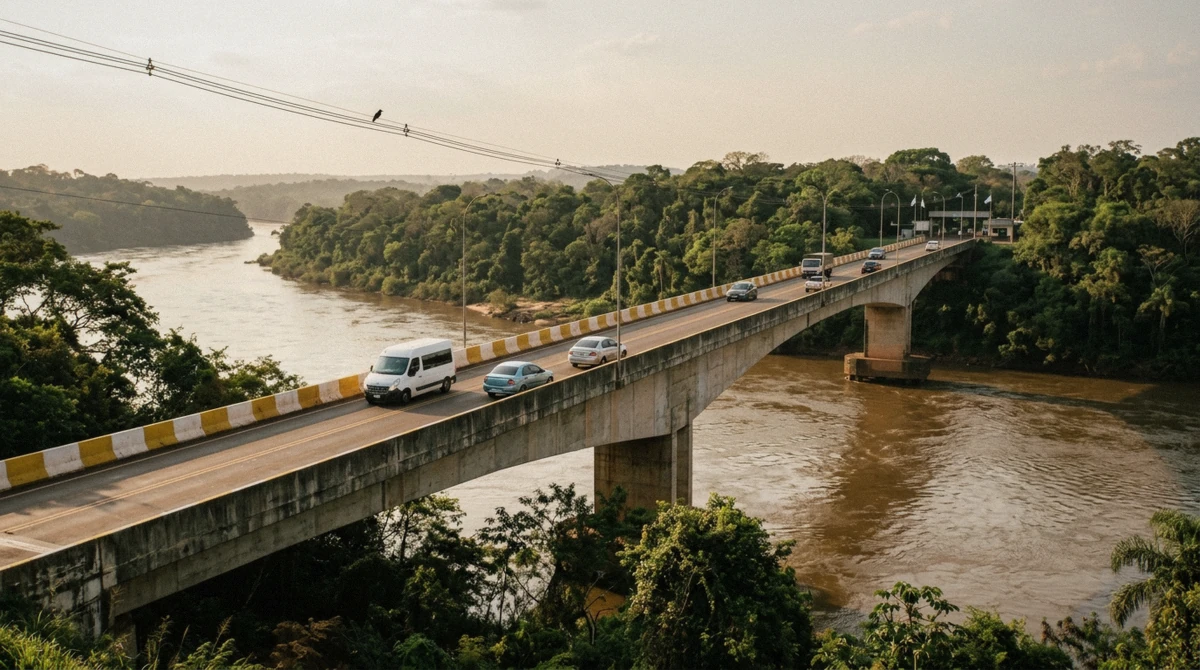
Public buses run between the two towns over the Tancredo Neves bridge and stop at both immigration posts. You get off, get stamped, reboard, and repeat in the other direction on the way back. The fare is small and the process is routine; the cost is time, and on a busy morning an hour each way is normal rather than exceptional.
A passport is required in both directions. Travellers from the United States, Canada and Australia need a Brazilian e-visa applied for before travel; it is not sold at the border.
What that means for a boat day
If your hotel is in Foz and you want the Argentine boat, an independent crossing eats most of a morning before you reach the park entrance, and Gran Aventura's fixed departures do not wait. That is the single case where the packaged option is not a convenience but a schedule fix, which is what the five-hour cross-border listing sells.
Going the other way, from Puerto Iguazu to the Brazilian side, is more forgiving, because Macuco Safari has no departure to miss.
Where a Booked Tour Actually Earns Its Money
The three cases
First, the border. Two immigration posts, two currencies and a boat with fixed departures is a lot to coordinate on a public bus, and a private car that waits is the product being sold.
Second, the ticket. On the Argentine side a package with admission inside it removes a queue and a currency problem on the morning you least want either. Third, families and mixed-mobility groups, where the walking distances between the bus stop, the entrance and the boat dock are longer than they look on the map.
And where it does not
A single adult with a morning free in Foz do Iguacu is paying a tour company to put them on a bus they could catch themselves. The Brazilian side is genuinely easy: one bus line, one ticket bought on a phone, one boat counter that never has a closed slot.
The honest summary is that this site compares tours and still says the Brazilian independent day works. Where the packages are worth their money, the comparison table shows exactly what they add.
A self-organised day, in order
The sequence below is what an independent boat day looks like on either bank. It is not complicated; it is simply unforgiving of a late start, because the Argentine boat runs to a timetable and the queues at both parks build from mid-morning.
- Buy park admission online the night before, or budget ten minutes at the window
- Take the first or second bus of the morning, not the third
- On the Argentine side, check in for Gran Aventura before walking any circuit
- Carry cash for the Puerto Iguazu tourist tax and small purchases inside the parks
- Put a change of clothes in a dry bag, or use the lockers at the entrance
- Do the Lower Circuit or the Cataratas trail after the boat, while you dry
- Leave the last bus time in your pocket: the Argentine service stops in the early evening
Visiting Iguazu Falls Without a Tour: Questions
Can you visit Iguazu Falls without a tour?
Yes, on both banks. A public bus runs from the Puerto Iguazu terminal to the Argentine park roughly every twenty minutes, and line 120 in Foz do Iguacu runs to the Brazilian visitor centre. Both parks sell admission at the gate and online, and both boats are sold at counters inside the parks.
How do you get to the Argentine park by public transport?
From the Puerto Iguazu bus terminal, on the Rio Uruguay service to the park entrance on Ruta 101. Departures run roughly every twenty minutes from early morning, the fare is about AR$10,000 each way, and the ride takes twenty to twenty-five minutes.
How do you get to the Brazilian park by public transport?
Line 120, which runs from the airport through the central bus terminal to the park visitor centre at km 18 on the BR-469, roughly every twenty minutes for a few reais. Inside the park, the double-decker buses along the internal road are included in the entry ticket.
Do you need to book the boat in advance?
On the Argentine side it helps: Gran Aventura runs to fixed departures with a check-in that closes before each one. On the Brazilian side you do not need to at all, because Macuco Safari leaves every twenty minutes from 09:00 to 17:00 with no timed slot.
Is it cheaper to visit Iguazu Falls without a tour?
On the Argentine side, yes, by roughly US$40 to US$60 depending on which package you compare against. On the Brazilian side the gap almost disappears, because a private half-day with both tickets included costs about what the tickets cost on their own.
What is the hardest part of doing it independently?
The border, if you need to cross it, and the Argentine boat's fixed departures. Neither is difficult on its own; combined on a single morning they are what makes people book a car that waits instead of a bus that does not.